10 Important Events in the Month of Safar in Islamic History: From the Prophet’s Hijrah to Lessons in Character Development
The month of Safar is the second month in the Islamic Hijri calendar and holds several important historical moments in the journey of Muslims. Unlike the belief held by some people who associate Safar with misfortune, Islam teaches that every moment given by Allah SWT carries value and provides an opportunity to strengthen faith and improve oneself.
Islamic scholars explain that Safar is not a month of harm or bad luck. Prophet Muhammad ﷺ taught his followers to abandon beliefs in the superstition of certain times and always maintain good thoughts and trust in Allah SWT.
Throughout Islamic history, several important events have been associated with the month of Safar, including events related to the struggles of Prophet Muhammad ﷺ, the spread of Islamic teachings, and the lives of great Muslim figures.
1. The Beginning of Prophet Muhammad’s ﷺ Hijrah from Makkah to Madinah
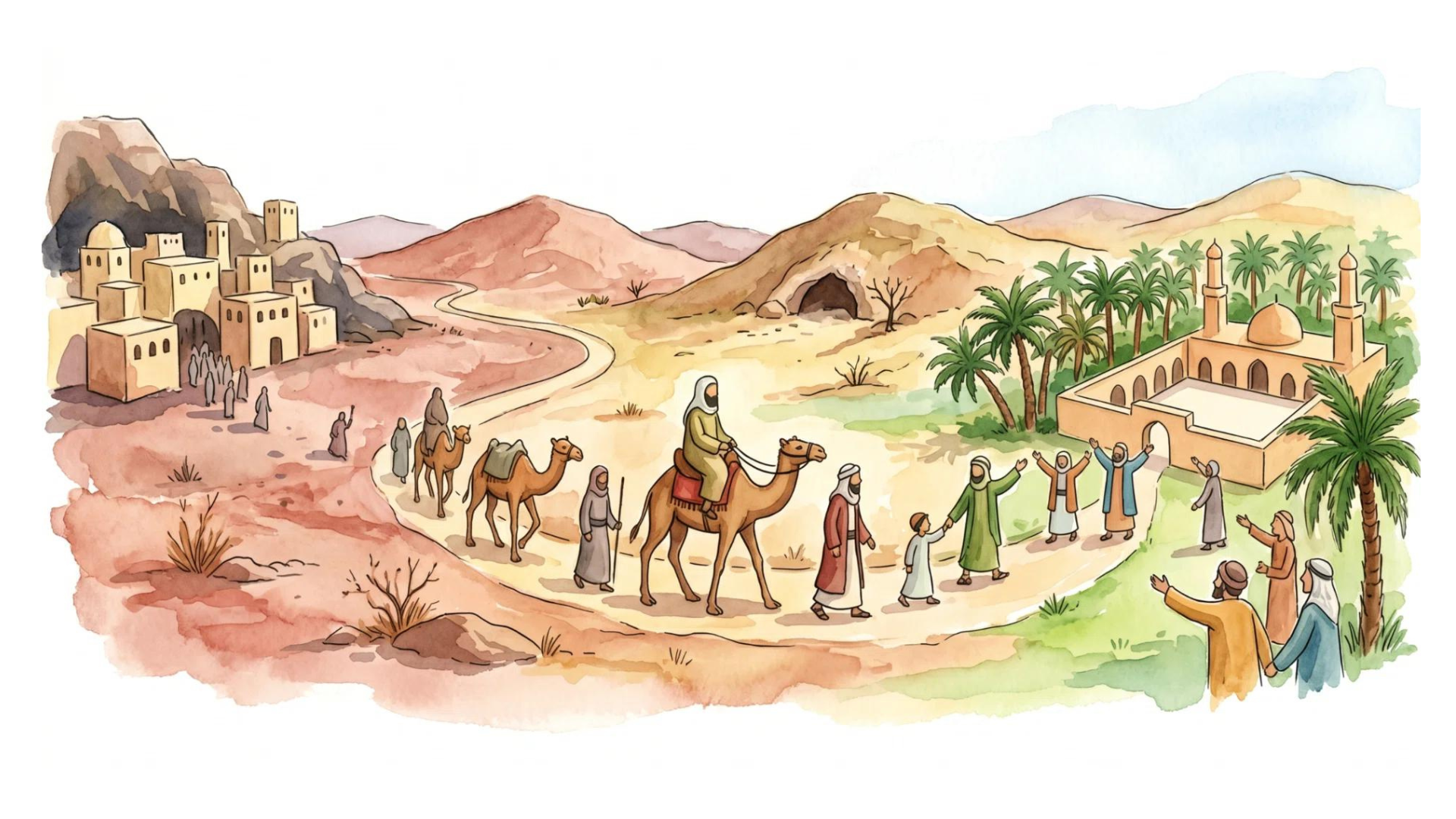
One of the most significant moments associated with the month of Safar was the beginning of the Hijrah of Prophet Muhammad ﷺ from Makkah to Madinah — a journey that transformed the history of Islam forever.
Before the Hijrah, the Prophet ﷺ and the early Muslims faced years of hardship, persecution, and oppression from the Quraysh tribe in Makkah. Many believers were tortured, isolated, and prevented from practicing their faith freely. Despite these difficulties, Prophet Muhammad ﷺ continued to spread the message of Islam with patience, wisdom, and compassion.
As the pressure from the Quraysh increased, Allah SWT granted permission for the Prophet ﷺ to leave Makkah and migrate to Madinah, where a new chapter of Islamic civilization would begin.
The Prophet ﷺ departed from Makkah accompanied by his closest companion, Abu Bakr Ash-Siddiq رضي الله عنه. Their journey was not simply a physical migration, but a journey of complete faith, sacrifice, and trust in Allah SWT.
Leaving behind his beloved hometown, family, and possessions, Prophet Muhammad ﷺ demonstrated that obedience to Allah comes above worldly attachments. The Hijrah teaches Muslims that sometimes great changes require courage, patience, and willingness to sacrifice for a greater purpose.
The arrival of the Prophet ﷺ in Madinah became a turning point in Islamic history. There, Muslims built a community based on faith, justice, brotherhood, and mutual support. The Hijrah later became the foundation for the Islamic Hijri calendar and remains one of the greatest examples of perseverance and reliance upon Allah.
2. The Prophet ﷺ Took Shelter in the Cave of Thawr
During the journey of Hijrah, Prophet Muhammad ﷺ and Abu Bakr Ash-Siddiq رضي الله عنه faced a dangerous situation when the Quraysh discovered that the Prophet ﷺ had left Makkah.
The Quraysh sent search parties to find and capture him, offering rewards to anyone who could locate the Prophet ﷺ and Abu Bakr رضي الله عنه.
To protect their journey, the Prophet ﷺ and Abu Bakr رضي الله عنه stayed inside the Cave of Thawr for several days. The cave became a symbol of patience, trust, and divine protection.
According to Islamic tradition, when the searchers came close to the entrance of the cave, Abu Bakr رضي الله عنه became concerned for the safety of the Prophet ﷺ. However, the Prophet ﷺ reassured him with the words:
“Do not grieve; indeed Allah is with us.”
(Qur’an 9:40)
This moment teaches an important lesson: Muslims are encouraged to make careful efforts while placing their ultimate trust in Allah SWT.
The Prophet ﷺ did not rely only on miracles; he planned carefully, took precautions, and used wisdom. At the same time, he remained certain that Allah’s help would always be present.
3. The Wise Strategy Behind the Hijrah Journey
The Hijrah journey was not carried out randomly. Prophet Muhammad ﷺ showed remarkable wisdom and careful planning throughout the migration.
Instead of taking the usual route from Makkah to Madinah, which was commonly monitored by the Quraysh, the Prophet ﷺ chose a different path to avoid danger.
He also arranged important details before leaving. Trusted individuals played roles in supporting the journey, including providing information, preparing supplies, and assisting the travelers.
This demonstrates that faith in Allah does not mean abandoning effort. Islam teaches a balance between tawakkul (trust in Allah) and responsible action.
The Hijrah became a timeless example that success requires prayer, preparation, intelligence, and patience.
For Muslims today, this story teaches the importance of making wise decisions, planning ahead, and facing challenges with confidence and faith.
4. The Expedition of Al-Abwa’ or Waddan
In Safar of 2 AH, Prophet Muhammad ﷺ led the expedition of Al-Abwa’ (also known as Waddan), one of the earliest military and diplomatic journeys after the establishment of the Muslim community in Madinah.
At that time, the Muslim community was still developing and facing various threats from surrounding groups. The Prophet ﷺ worked to protect the security of Madinah while also establishing peaceful relationships with neighboring tribes.
The expedition was not only about defense but also about maintaining stability and protecting the freedom of Muslims to practice their religion.
This event reflects the Prophet’s ﷺ leadership qualities — his ability to combine strength, wisdom, diplomacy, and concern for the well-being of society.
5. The Journeys of Islamic Dawah by the Companions and Scholars
After the passing of Prophet Muhammad ﷺ, the spirit of spreading Islam continued through the companions, scholars, and teachers who traveled across different regions.
Many of them journeyed through difficult lands to teach the Qur’an, share Islamic knowledge, and guide communities toward faith and noble character.
Their journeys required patience, courage, and sacrifice. They left the comfort of their homes to serve others and preserve the teachings of Islam.
These efforts helped Islam reach different parts of the world and created generations of scholars, educators, and communities dedicated to knowledge and good character.
The month of Safar serves as a reminder of the importance of continuing the mission of spreading goodness and beneficial knowledge.
6. The Passing of Imam Hasan Al-Askari رحمه الله
Some historical sources mention that Imam Hasan Al-Askari رحمه الله, an important figure in Islamic scholarship, passed away during the month of Safar in 260 AH.
He was known for his deep knowledge, devotion to worship, and dedication to guiding people toward righteousness.
His life represents the importance of knowledge, patience, and spiritual development in Islam.
The passing of great scholars throughout history reminds Muslims that although individuals leave this world, their knowledge, teachings, and good deeds can continue to benefit future generations.
7. Safar as a Time to Learn from Previous Generations
Throughout Islamic history, many respected scholars, leaders, and righteous individuals lived and passed away during different periods, including the month of Safar.
Their stories remind Muslims that life is temporary, but the impact of good actions can remain for generations.
The legacy of previous generations teaches valuable lessons about sincerity, perseverance, humility, and dedication to serving humanity.
Safar can become a time for Muslims to reflect on their own lives and ask: What positive legacy will we leave behind?
8. Gatherings of Knowledge and Prayer During Safar
In many Muslim communities around the world, the month of Safar is often a time for Islamic lectures, Qur’an gatherings, prayers, and community activities.
These gatherings are not based on the belief that Safar is an unlucky month. Instead, they are opportunities to increase remembrance of Allah SWT, strengthen relationships, and encourage acts of kindness.
Through learning and worship, Muslims use this month as a reminder to improve their connection with Allah and with one another.
9. Removing the Belief That Safar Brings Misfortune
One of the important teachings related to Safar is the rejection of superstitions that consider certain times or months as sources of bad luck.
Prophet Muhammad ﷺ taught Muslims that all events occur by the permission and wisdom of Allah SWT.
A believer should not live with fear of dates, months, or signs. Instead, Muslims are encouraged to have faith, make sincere efforts, pray, and remain optimistic.
Safar reminds humanity that true security comes from trust in Allah, not from superstition.
10. Safar as a Moment for Improving Character
The month of Safar provides an opportunity for Muslims to reflect on their faith and personal character.
The historical lessons of Safar encourage qualities such as patience, honesty, compassion, courage, and perseverance.
The greatest message of Safar is not fear, but transformation — becoming a better person and strengthening our relationship with Allah SWT.
By understanding the true meaning of Safar, Muslims can leave behind unfounded beliefs and embrace a life filled with faith, positive actions, and beautiful character.
Conclusion
The month of Safar is not a month of fear or misfortune. It is a month filled with lessons from Islamic history — lessons of faith, sacrifice, patience, and character development.
Through the stories of Prophet Muhammad ﷺ, the companions, and the scholars who came after them, Safar reminds us that every challenge can become a path toward growth and every journey can bring us closer to Allah SWT.